
AI copywriting is everywhere right now—and if you’re a business owner or leader, you’ve probably already experimented with tools like ChatGPT or Jasper.
Maybe you’ve used them to draft a blog post, generate social captions, or even write your website copy.
And at first? It feels like magic.
But soon enough, the magic starts to disappear.
After all, AI copywriting is helpful—but where businesses get it wrong is complete reliance on it.
I’ve seen it firsthand. Businesses publish unedited AI content, lose their brand voice, blend in with competitors, and—perhaps most importantly—watch their website performance decline over time.
This article isn’t here to scare you away from AI. Quite the opposite.
It’s here to help you use it properly—so you get the speed and efficiency of AI without sacrificing quality, strategy, or results.
Because the goal isn’t to replace human copywriting; it’s to enhance it.
AI Copywriting: The Basics
What It Is
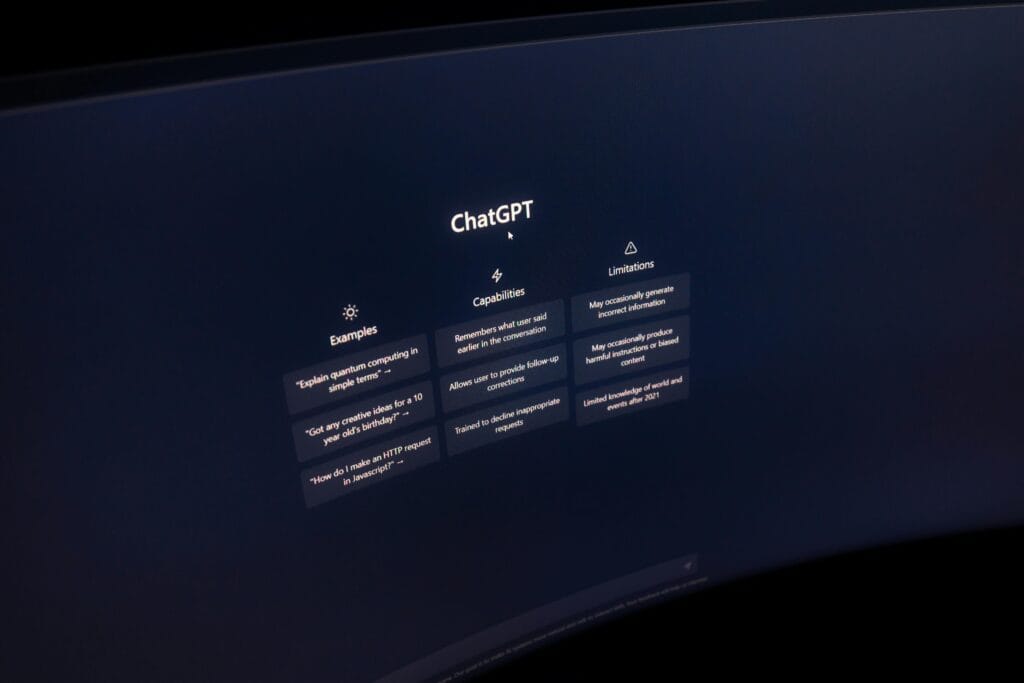
AI copywriting refers to the use of artificial intelligence tools to generate written content—anything from blog posts and emails to website pages and social media captions.
These tools are trained on massive datasets of existing content and use language patterns to generate text that sounds human.
But sounding human—and being effective marketing copy—are two very different things.
How It Works
At a basic level, AI copywriting tools predict what words should come next based on your input (prompt).
The quality of the output depends heavily on:
- The quality of your prompt
- The clarity of your direction
- The specificity of your input
If you give vague instructions, you’ll get vague content. But if you give strategic, detailed direction, you can get something usable—but still not publish-ready.
Why It’s Popular
AI copywriting has exploded in popularity for a few key reasons:
- Speed: What used to take hours can now take minutes
- Cost-effectiveness: It feels like a cheaper alternative to hiring a professional
- Accessibility: Anyone can use it, regardless of writing experience
- Scalability: Businesses can produce more content, faster
And to be fair—these are all valid benefits.
Why You Should Use It
Used correctly, AI can be a powerful tool in your marketing workflow. Here’s where it shines:
- Brainstorming blog topics and content ideas
- Generating headline variations
- Creating structured first drafts
- Repurposing existing content
- Speeding up production timelines
In my own workflow, I regularly use AI for:
- Title options
- First drafts (based on a detailed outline and prompt)
- Final editing passes
But—and this is critical—I never publish AI-generated content as-is. I also still offer my 100% original copywriting services for clients who don’t want AI used at all.

Why You Shouldn’t Rely on It
This is where most businesses go wrong. AI-generated content often:
- Lacks a distinct brand voice
- Feels generic and repetitive
- Misses strategic nuance
- Includes inaccurate or outdated information
- Fails to truly differentiate you from competitors
I’ve also seen businesses take competitor content, run it through AI, tweak a few words, and call it a day.
That’s not strategy. That’s noise.
Over time, it leads to:
- Brand dilution
- Lower engagement
- Poor conversion rates
- Declining SEO performance
In fact, I worked with a client who relied entirely on AI to rewrite their website. Within 7 months, their Google rankings dropped significantly.
The content was technically “correct”—but it didn’t capture their unique value, voice, or positioning.
Once I rewrote the content (using human-led AI properly), we began to see an early uptick in traffic—even before the typical 6–12-month SEO window.
That’s the difference strategy makes.
Suitable Occasions for Using (and Not Using) AI Copywriting
Here’s a simple breakdown of when AI works—and when it doesn’t:
| Use AI For | Avoid Using AI Alone For |
|---|---|
| Brainstorming ideas | Website homepage copy |
| Blog outlines | Core service pages |
| First drafts | Brand messaging |
| Headline variations | Sales pages |
| Content repurposing | Thought leadership content |
| Basic social posts | SEO-critical content without strategy |
Rule of thumb: If the content directly impacts your revenue, positioning, or search rankings—AI should never be the final step.
How to Get Started with AI Copywriting (the Right Way)
If you want to use AI effectively, here’s a smarter approach:
Step 1: Start with Strategy (Not AI)
Before you open any AI tool, define:
- Your target audience
- Your goal for the content
- Your key messaging
- Your brand voice
AI can’t think strategically for you—it can only execute what you give it.
Step 2: Do Your Own Keyword Research
AI tools are notoriously unreliable for keyword research. Use trusted tools and data sources to:
- Identify search intent
- Understand competition
- Choose the right keywords
Then feed that information into your AI prompt.
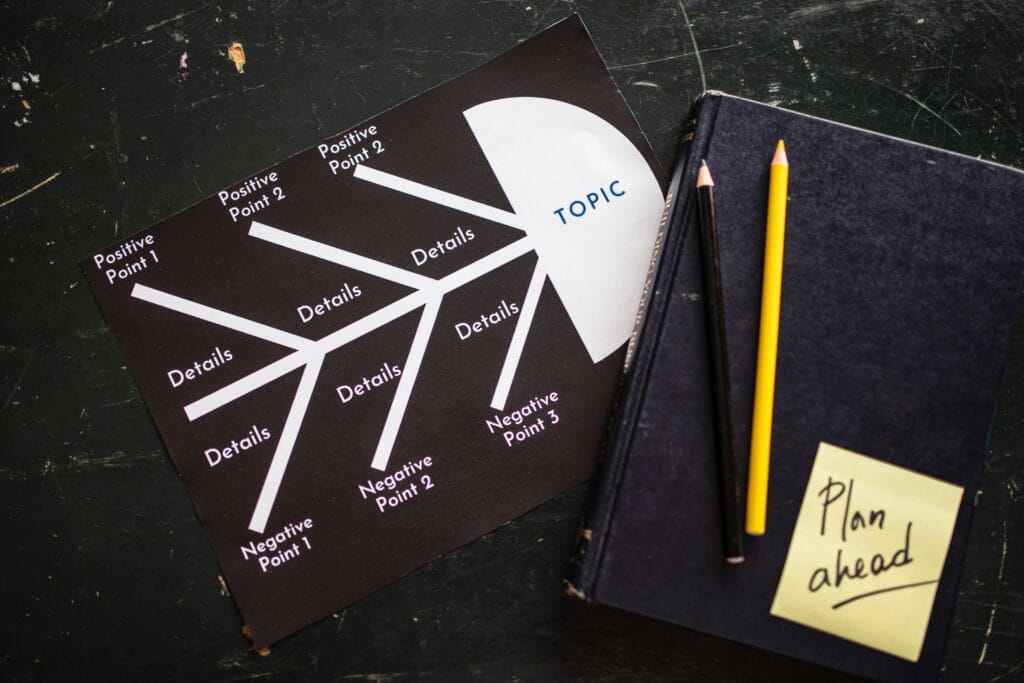
Step 3: Create a Detailed Outline
The better your outline, the better your output. For example, when I recently wrote a blog post that ranked on page one of Google:
- I conducted detailed keyword and competitor research,
- Built a structured outline, and
- Wrote a 3-page prompt.
Only then did I use AI to generate the draft.
Step 4: Treat AI as a Drafting Tool
Let AI generate the first version—but expect to rewrite and refine it. Think of it as a starting point, not a finished product.
Step 5: Edit (More Than Once)
In my workflow, I typically edit AI-assisted content at least 3–4 times:
- First pass: Structure and clarity
- Second pass: Brand voice
- Third pass: SEO optimization
- Fourth pass: Final polish
This is where the real value comes in.
Tips and Tricks for Better AI Copy
If you’re going to use AI, use it well.
Be Specific in Your Prompts
Generic input = generic output. Detailed prompts lead to stronger drafts.
Always Fact-Check
AI can sound confident while being completely wrong. Verify everything!
Don’t Trust AI for Keyword Strategy
Use real data, always.
Inject Your Voice
This is non-negotiable. Your tone, perspective, and experience are what make your content stand out.
Avoid the “Competitor Remix” Trap
If your strategy is to take what competitors are doing and tweak it slightly…you’re already behind.
Focus on Differentiation
Ask yourself: “Could this content be published by any of my competitors?”
If the answer is yes, it needs more work.
What If I Don’t Want to Use AI Copywriting?
That’s completely valid.
Despite all the hype around AI, not every business wants to use it—and not every business should. Some brands prioritize:
- Fully original, human-written content
- A deeply nuanced brand voice
- Thought leadership that reflects real experience and perspective
- Complete control over messaging, tone, and positioning

In these situations, AI can’t fully replicate those things.
While it can mimic language patterns, it doesn’t bring:
- Lived experience
- Strategic intuition built over years
- A true understanding of your brand’s evolution
- The ability to challenge assumptions or push ideas further
For some businesses—especially those in competitive, high-trust, or premium markets—100% human-written copy is still the strongest choice.
Human-Guided AI Copywriting Services at Sarah McKenzie Copywriting & Web Design
This is exactly why I offer human-led AI copywriting services. Businesses don’t need more content, faster content, or heaper content. They need better content.
My approach combines:
- 15+ years of copywriting and marketing experience
- Deep understanding of SEO, AEO, and GEO strategies
- Proven frameworks for conversion-focused content
- Strategic keyword and competitor research
- And yes—the efficiency of AI tools
But always guided by human expertise.
That means:
- Your brand voice is preserved
- Your messaging is clear and differentiated
- Your content is optimized for search and conversions
- Your business actually stands out
This isn’t about replacing copywriting; it’s about elevating it.

So, What Does AI Copywriting Really Mean for Your Business?
AI copywriting isn’t going anywhere. And used correctly, it can absolutely make your marketing more efficient.
But here’s the takeaway I want you to remember: AI is a partner—not a replacement.
Right now, many businesses are drowning in a sea of AI-generated content. Everything starts to sound the same, look the same, and even perform the same.
If you want to stand out, you can’t rely on the same tools in the same way as everyone else. You need:
- Strategy
- Experience
- Perspective
- And a human touch
Because at the end of the day, people don’t connect with perfectly structured sentences. They connect with ideas, clarity, and authenticity. And that’s something AI—on its own—still can’t deliver.
If you’re using AI (or thinking about it), the question isn’t whether you should. It’s whether you’re using it in a way that actually moves your business forward.
If not, it might be time to rethink your approach.
FAQs: AI Copywriting Explained
What is AI copywriting?
AI copywriting is the use of artificial intelligence tools like ChatGPT to generate written content such as blogs, website copy, and social media posts. It uses language patterns to create human-like text, but still requires human editing for accuracy, brand voice, and effectiveness.
Is AI copywriting good for SEO?
AI copywriting can support SEO, but it is not a complete solution. It does not reliably perform keyword research or fully understand search intent. For best results, AI-generated content should be guided by human-led SEO strategy, including keyword research, optimization, and editing.
Can AI replace copywriters?
AI cannot replace copywriters. While it can generate content quickly, it lacks strategic thinking, brand voice, and differentiation. Businesses that rely solely on AI often produce generic content that fails to engage audiences or convert effectively.
What are the risks of AI copywriting?
The main risks of AI copywriting include generic content, loss of brand voice, inaccurate information, and weak SEO performance. Without human editing, AI content can reduce engagement, lower search rankings, and make your brand blend in with competitors.
When should you use AI copywriting?
AI copywriting is best used for brainstorming ideas, creating outlines, generating first drafts, and producing headline options. It works as a starting point, helping speed up content creation, but should always be refined and finalized by a human.
When should you avoid AI copywriting?
Avoid relying on AI alone for website copy, sales pages, brand messaging, and SEO-critical content. These require strategic thinking, strong positioning, and a consistent brand voice that AI cannot fully replicate.
What is human-led AI copywriting?
Human-led AI copywriting combines AI efficiency with expert editing and strategy. AI is used for drafting and ideation, while a professional copywriter ensures the content is accurate, optimized, aligned with brand voice, and designed to convert.
How do you use AI for content writing effectively?
To use AI effectively, start with a clear strategy, conduct your own keyword research, and create a detailed outline. Use AI to generate a draft, then edit it multiple times to improve clarity, voice, SEO, and accuracy before publishing.
Are AI copywriting services worth it?
AI copywriting services are worth it when they include human oversight. Human-led services ensure content is strategic, optimized, and aligned with your brand. Fully automated AI services often produce generic content that lacks impact and performance.
How is AI changing copywriting?
AI is changing copywriting by increasing speed and content output. However, it also makes differentiation more important. As more businesses use AI, high-quality, human-led content becomes essential for standing out and achieving strong SEO and conversion results.